Snowy The Rare Turkish Angora Cat Who Looked Like A Coat

Some pets arrive like a surprise. Others feel as if they were waiting for you before you even knew how much you needed them.
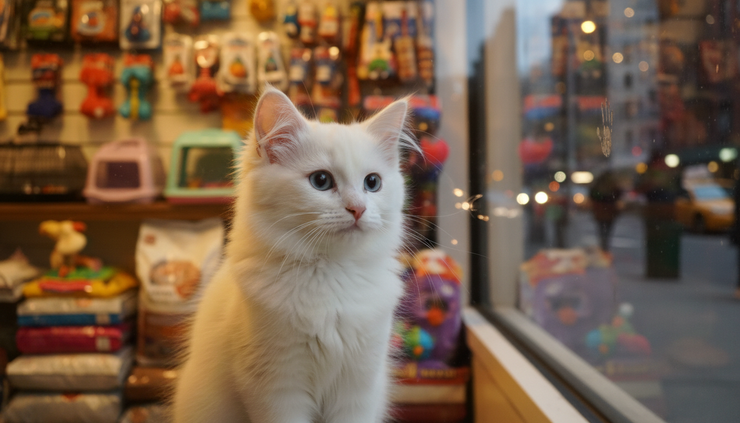
My first lesson in that kind of love came from animals. Before I was born, there was Bully, the dog I named even though he had already claimed his place in the family. Later, during my early years in New York City, there was Snowy, a rare Turkish Angora cat with blueish eyes, snow-white hair, and a way of disappearing so well that a neighbour once mistook her for my winter coat.
That moment stayed with me because it said everything about Snowy. She was beautiful, quiet, bold and almost invisible when she wanted to be. She did not give her attention away to everyone. With me, though, she was soft, loyal and full of life.
Bully came first and taught me how animals become family
Before Snowy, there was Bully.
Bully was the dog who had been there before I was born. That gave him a special kind of power in my childhood. He was not just a pet I met one day. He felt like part of the foundation of home, the way a familiar gate, a favourite room or a family voice feels permanent when you are young.
I named him Bully, but he was not a bully in the cruel sense. His name had the sound of a child’s confidence in it. Children often name animals with feeling before logic. A dog can be called anything if the name is given with love.
Growing up with him made animals feel natural to me. They were not decorations in a house. They had moods, habits, loyalties and private ways of understanding people. A dog can teach a child that love does not always need many words. A wagging tail, a warm body nearby or a patient look can say enough.
That mattered later, because Snowy was nothing like Bully.
Where a dog often comes towards the world, a cat may stand back and study it first. Bully gave me the simple joy of having an animal around. Snowy taught me the quiet honour of being chosen.

New York City made everything feel larger
My early years in New York City opened another world to me.
My grandfather showed me the city life. Through him, the city became more than busy streets and tall buildings. It became a place of movement, shop windows, winter air, pavement sounds and unexpected discoveries. He had a way of walking through the city that made it feel safe enough to notice.
One day, we passed a pet shop.
To a child, size is not only measured in metres. It is measured in wonder. That pet shop looked bigger than the one back home in Johannesburg, South Africa. It also seemed bigger and more beautiful than shops I had seen in London. Maybe it truly was larger, or maybe New York had already made everything feel grander. Either way, the place caught my attention.
Inside was the cat I could not forget.
She was a grown kitten, not a tiny baby, but still young enough to carry that half-kitten look. She was a Turkish Angora, a rare breed to me at the time and she looked almost unreal. Her hair was snow white, soft-looking and full. Her eyes had a blueish glow. She did not seem ordinary. She looked as though someone had taken winter, brushed it carefully, and placed it behind glass.
I had to have her.
There are moments in childhood when wanting is not greedy. It is pure recognition. I saw Snowy and felt, without having to explain it, that she belonged with me.
Turkish Angoras are often known for their silky coats, fine features and alert personalities. Many are active and social. Snowy had some of that elegance, but she also had her own way. She was not the kind of cat who performed for everyone. She watched, judged, waited and then decided (she was more like me without any questions asked).
That made her feel even more special.
Snowy looked like winter and moved like a secret
We (my Papa and myself) named her Snowy because no other name would have fit.
Her coat was the first thing people noticed, if they noticed her at all. It was white in the way fresh snow is white before anyone steps on it. Her fur seemed to catch the light, especially in winter. When she curled up, she could look less like an animal and more like something placed gently on a chair.
One winter day, a neighbour came over. Snowy was resting somewhere close, so still and so white that the neighbour almost thought she was my coat. Not a cat. Not a living thing with blueish eyes and strong opinions. A coat.
That story became one of the clearest pictures I have of her.
It was funny, but it also made sense. Snowy had the gift of hiding in plain sight. No one could ever notice her unless she allowed it. She could be right there, bold and present, yet somehow blend into the room. Her colour helped, of course, but it was more than that. It was her control.
She knew how to make herself small without being weak.
That was one of her strongest traits. Snowy was bold, but she was not loud. She was obedient, but not needy. She seemed to understand that she had one owner, one person she trusted fully and that person was me.
Some pets love the whole room at once. Snowy did not.
She had favourites. She had rules. She had boundaries. In her quiet way, she made those things clear.

She chose stillness over games
Snowy was not a playful cat in the way many people expect cats to be.
She did not always chase things for the pleasure of being watched. She was not constantly jumping, scratching, or demanding attention. She could play, but it was not her favourite language. Her favourite language was presence.
My grandfather noticed this and found it funny. He thought Snowy and I matched perfectly because I was so quiet. Looking back, I understand what he meant.
Some children fill a house with noise. Others observe first. I was one of the quiet ones. Snowy was quiet too, but never unaware. She could be hidden somewhere, yet she knew what was happening. If somebody new entered the house, she did not rush forward. She would disappear into a corner, behind furniture or somewhere only she understood.
From that place, she would watch.
Her stillness was not fear alone. It was judgement. She wanted to know who had entered, how they moved and whether they deserved her trust. I admired that about her, even before I had the words for it.
Near me, she changed.
When Snowy sat beside me, her secrecy softened. She would purr. Her tail would move with a life I did not see around strangers. That small movement felt like a private sign. Other people might have seen a quiet cat. I saw the version of her that trusted.
Some animals do not love loudly. They love by staying close when they could have gone anywhere else.
That was Snowy.
She showed affection without making a performance of it. She did not need to entertain guests. She did not need to prove that she was friendly. She saved her gentlest self for the person she had chosen.
Because of that, being loved by her felt personal.
The rare beauty of a one-person cat
People often talk about cats as if they are distant or cold. Snowy proved how wrong that can be. She was selective, yes, but not cold. She had deep affection. She simply did not spend it everywhere.
A one-person cat can be misunderstood. Visitors may think the cat has no personality because they never see it. They may only catch a flash of white fur under a table or a pair of eyes watching from a hidden place. They may think the cat is shy, unfriendly, or uninterested.
That is only half the story.
With her person, a one-person cat can become completely different. Snowy was like that. The house could contain noise, guests, winter coats, footsteps and conversation, but she knew where I was. If she came to me, it felt deliberate. If she purred near me, it felt earned.
Her loyalty did not look like Bully’s loyalty. Bully, like many dogs, belonged openly. Snowy belonged privately.
Both kinds of love were real.
That contrast shaped how I understood animals. A pet does not have to behave the way people expect to be loving. A quiet cat can be devoted. A reserved animal can be deeply attached. A pet who hides from visitors may still have a rich inner world and a strong bond with the person they trust.
Snowy was beautiful because of her looks, but she stayed in my memory because of her nature.
Her beauty was easy to see. Her trust had to be noticed.

What Snowy taught me about being seen
The memory of Snowy being mistaken for a coat still makes me smile, but it also feels meaningful now.
So much of her life with us was about seeing and being seen. Other people missed her. They walked into the room and did not realise she was there. They saw a coat, a shadow, a pale shape, or nothing at all.
I saw Snowy.
I saw the way she observed strangers. I saw how her tail moved when she was happy with me. I heard the purr that came out when she felt safe. I understood that her quietness was not emptiness. It was her way of being in the world.
Maybe that is why my grandfather thought we matched.
Quiet people and quiet animals are often underestimated. People may think silence means there is nothing happening, but silence can hold attention, feeling and a whole private language.
Snowy had that language.
She taught me that companionship can be calm. It can sit beside you without asking for much. It can hide when the world feels too crowded, then return when the right person is near. It can be as soft as fur against your hand and as clear as a purr in a quiet room.
Bully gave me my first idea of animal love. Snowy gave me a more private version of it.
She was the rare cat from a New York pet shop, the snow-white Turkish Angora with blueish eyes, the one who looked like a coat in winter. She was also the pet who showed me that being chosen by an animal is one of childhood’s sweetest honours.
Some memories fade at the edges. Snowy never has. I can still picture her hidden somewhere, watching everything, waiting until the room felt safe.
Then she would come to me.


Comments